
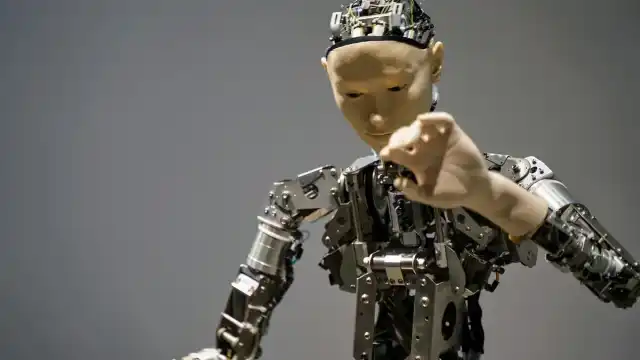
As robots become more common in homes, they often need to perform tasks in different rooms, leaving users in the dark about what's happening. This lack of visibility can make robots seem unpredictable and untrustworthy, undermining the very convenience they're meant to provide. A new study tackles this problem head-on by exploring whether robots can effectively communicate their progress even when they're out of sight, using a social mediator to bridge the gap.
The researchers found that when a social robot provides real-time updates about what a hidden robot is doing, users feel much more informed and engaged. In a controlled experiment with 30 participants, the team compared two scenarios: one where a robot performed tasks silently in another room, and another where a co-located social robot named Pepper gave verbal and visual updates about the hidden robot's states, such as navigating, grasping, or recovering from failures. were striking: task-focused attention jumped from 15.8% to 84.6%, and subjective ratings for clarity, dependability, engagement, and overall appeal all improved significantly, with all p-values below .001. Importantly, 83% of participants preferred the system with updates, showing a clear user preference for transparency.
To test this, the researchers designed a distributed robotic system with two main components: an execution robot, a mobile manipulator called Stretch 3 that retrieved objects in a separate space, and a social mediator robot, Pepper, that stayed with the user. The system used a coordination server to synchronize task-level states between the robots, as outlined in Figure 1. These states included discrete phases like NAVIGATING, SEARCHING, GRASPING, and RECOVERING, which were abstracted from low-level control signals to make them understandable to users. In the baseline condition, the execution robot operated autonomously without sharing updates, while in the experimental condition, Pepper externalized these states through speech and a tablet display, even requesting user confirmation during failures.
The data from the study, detailed in Tables IV and V, shows that the externalization condition led to substantial gains without compromising performance. While task initiation time increased from 33.47 seconds to 49.93 seconds due to extra interaction steps, overall end-to-end task time did not differ significantly between conditions, with p = .271. Execution time actually decreased slightly in the externalized condition, from 162.63 seconds to 137.33 seconds. The researchers also analyzed failure modes, as shown in Figure 7, and found no systematic differences that could explain the perceptual improvements, reinforcing that the benefits came from the transparency mechanism itself.
This research has important for the future of home robotics, where multi-room systems are becoming more prevalent. By externalizing task states through a social mediator, designers can mitigate the 'state awareness gap' that occurs when robots work out of sight, enhancing user trust and engagement. The study suggests that transparency should be treated as an architectural variable in distributed systems, not just an add-on, and that using semantically meaningful updates rather than technical details is key to keeping users informed without overwhelming them. As robots take on more complex household tasks, such mechanisms could be essential for maintaining smooth and trustworthy human-robot interactions.
However, the study has limitations that point to areas for future work. It was conducted in a short-term laboratory setting with healthy adults, so long-term effects in real homes remain unknown. The tasks were limited to single-object retrieval, and more complex scenarios might the scalability of the state abstraction approach. Additionally, the research only compared full transparency with no transparency; intermediate levels, like failure-only notifications, were not explored. Future investigations could look into adaptive transparency mechanisms that adjust based on context, such as task criticality or user attention, to optimize the balance between autonomy and awareness.
Original Source
Read the complete research paper
About the Author

Guilherme A.
Former dentist (MD) from Brazil, 41 years old, husband, and AI enthusiast. In 2020, he transitioned from a decade-long career in dentistry to pursue his passion for technology, entrepreneurship, and helping others grow.
Connect on LinkedIn