
Robotics
Where AI meets the physical world: embodied learning research, manipulation policies, sim-to-real transfer methods, and the papers pushing forward what autonomous robots can perceive and do. Coverage spans foundation models for robotics and classical control research.

AI Makes Self-Driving Cars See Better in Bad Weather
A new hybrid AI method generates realistic sensor data for rain and snow, helping autonomous vehicles navigate safely without costly real-world testing.

New AI Benchmark Tests Self-Driving Cars in Real-Time Scenarios
A new framework evaluates vision-language models in dynamic driving environments, revealing gaps in current AI's ability to handle unexpected situations and recover from errors.

Robots Learn Faster with AI-Generated Rewards
A new method uses language and vision models to create automatic feedback, boosting robot success rates by up to 56% without manual tuning—paving the way for more adaptable household assistants.

Robots Follow Hand-Drawn Paths in Real Space
A new mixed reality system lets users draw navigation routes directly on the floor, improving accuracy and ease of use for controlling mobile robots in shared environments.

Evolution Strategies Fall Short as AI Training Boost
A new study finds that simpler AI methods can't reliably speed up complex learning tasks, challenging hopes for faster and more stable training in robotics and gaming.

AI Unlocks Smarter Robot Teams Through Better Communication
A new approach integrates sensing, wireless networks, and AI models to enable robots to collaborate efficiently on complex tasks, from warehouse navigation to trash sorting, by dynamically optimizing resources based on real-time needs.

AI Memory Retains Past 30 Days with Just 10 Slots
A new AI method compresses daily experiences into a smooth 'movie' of the past, allowing resource-limited devices to recall old information without catastrophic forgetting—and it works with images too.

AI Observers Could Make Self-Driving Cars Safer
A new AI layer detects hidden road hazards by understanding context, but a critical flaw in video processing reveals a safety gap that must be fixed before deployment.
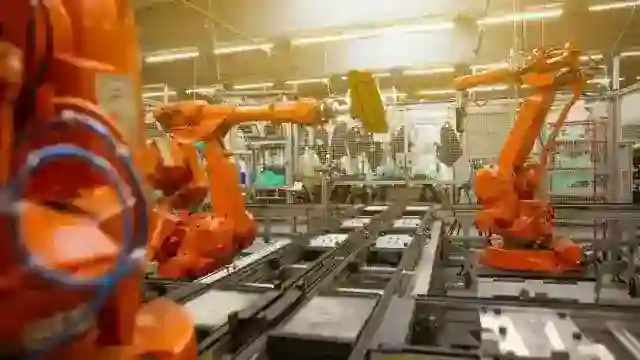
Robot Swarms Get Smarter by Mixing Different Types
A new study shows that combining diverse robots into a single team makes them more resilient and capable, offering a framework to design swarms that can adapt to failures and complex missions.

AI Research Lacks Standards for Robot Gender
A new study reveals that one-third of AI studies manipulate robot gender without measuring it, leading to unreliable results and reinforcing stereotypes in human-robot interactions.

AI Teaches Robots to See and Act in 3D
A new vision-language model integrates depth sensing to predict precise 3D action points, enabling robots to grasp, navigate, and place objects with human-like spatial understanding.

AI Still Can't Think Before It Acts in Robots
A new study reveals that large language models fail to check their own knowledge before making decisions in safety-critical robots, leading to unpredictable failures that could endanger humans.

How Motion Shapes AI's Sense of Scale
A new study shows that robots can improve their navigation accuracy by simply moving in curves, reducing scale errors by nearly half without extra sensors.

Robots Master Curved Surfaces with New Two-Stage Method
A novel AI framework enables robots to execute precise, repetitive tasks on complex curved surfaces without drifting or losing contact, using minimal sensors and offline geometric adaptation.

AI Finds Faster Paths for Robot Teams by Separating Planning from Action
A new method helps hundreds of robots navigate crowded spaces with fewer delays by planning routes first and resolving conflicts later, achieving near-linear scaling and 100% success rates in tests.
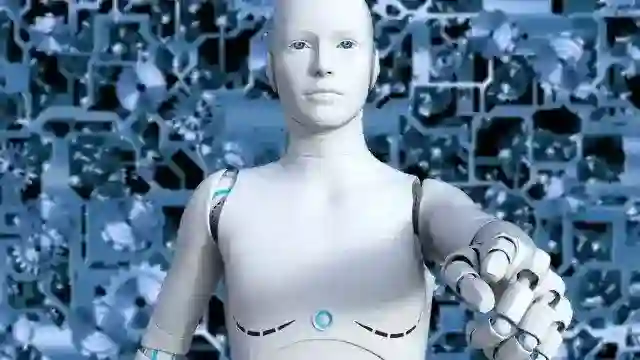
AI Helps Warehouse Robots Work Smarter, Not Harder
A new method reduces robot travel and shelf switching by up to 40%, making automated warehouses more efficient without changing physical layouts.
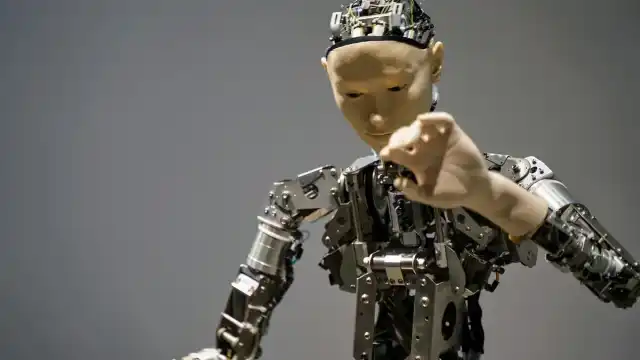
Robots Learn to Climb Stairs with Less Power
A new AI method teaches hybrid robots to blend flying and driving, cutting energy use by 38% on real-world stair-climbing tasks.

Robots Tell You What They're Doing When You Can't See Them
A new study shows that when robots work out of sight, having a social robot provide updates dramatically improves user trust and engagement—without slowing down the task.

Social Robot Helps Newcomer Kids Learn Language and Culture
A new robot designed with literacy experts can support immigrant children in learning English and adapting to Canadian life, addressing critical gaps in community programs.

AI Extends Firefighter Breathing Time by a Third
A new AI-controlled life support system for firefighters uses sensor fusion and predictive optimization to manage limited oxygen and scrubbers, boosting endurance by up to 34% while maintaining safety in extreme heat.
AI Agents Navigate Using Only Words and a Single Glimpse
A new method allows robots to follow complex instructions by imagining their entire path from just one starting view, without needing real-time feedback from the environment.
Robots Learn to Spot Vineyards with Minimal Human Help
A new AI system enables agricultural robots to detect and map vine trunks in real-time using limited training data, achieving over 70% accuracy in challenging field conditions.
AI Learns to Focus on What Matters for Robot Tasks
A new method uses graph neural networks to identify key objects in complex scenes, cutting planning time by up to 99% and enabling faster, more efficient robot decision-making in cluttered environments.
AI Improves Underwater Navigation with Geometry and Simulation
A new method combines neural networks with geometric filtering to enhance autonomous vehicle positioning, achieving over 17% better accuracy in real-world tests without labeled data.