
Quantum Computing
Where quantum computing meets machine learning: variational quantum algorithms, quantum-classical hybrid methods, error correction research, and the papers exploring whether quantum advantage is real for ML workloads or still a distant promise.

AI Uncovers Hidden Symmetries in Quantum Systems
A new method uses spectral data to reveal hidden symmetries in quantum many-body systems, enabling precise identification of symmetry groups without prior knowledge.

Quantum Codes Get a New Efficiency Boost
Researchers have developed a method to find the most resource-efficient physical circuits for implementing logical operations in small quantum error-correcting codes, potentially reducing overhead for fault-tolerant quantum computing.

Quantum Computing Could Transform Wireless Networks
A new hybrid approach uses quantum algorithms to solve complex routing problems in dynamic wireless environments, potentially improving efficiency and reliability in dense networks.
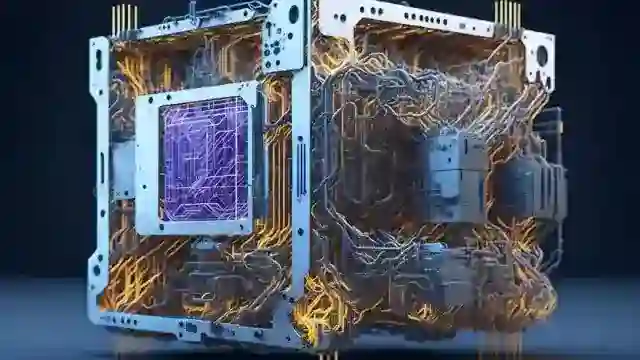
Quantum Clock Reveals When Particles Arrive
A new approach to an old physics puzzle shows how time emerges from quantum correlations, challenging traditional interpretations of quantum mechanics.

Quantum Beats Classical in New Communication Task
Researchers discover a surprising quantum advantage in identifying messages through noisy channels, with implications for secure data transmission and quantum contextuality.
How Monitoring Shapes Relativistic Physics
A new study shows that continuous measurement of a quantum system can dynamically generate the mathematical structure of relativity, including mass-shell constraints and Lorentz symmetry, from a purely Euclidean starting point.

Quantum Computing Reveals Hidden Supply Chain Risks
A new quantum algorithm simulates 40-node retail networks in seconds, exposing cascade failures that classical models miss by a factor of four, with potential to transform crisis response.

AI Reveals Hidden Rigidity in Quantum Geometry
A new mathematical framework shows that quantum systems with dissipation can preserve geometric properties up to a surprising degree, offering a controlled way to study open systems without losing spectral information.
Quantum Error Correction Gets a Simpler Fix
A new circuit design for quantum computers avoids critical errors with fewer resources, potentially making fault-tolerant quantum computing more practical and scalable.

New AI Method Cleans Up Quantum Computer Errors
A technique borrowed from image processing can sharpen the blurry results of today's quantum computers, making them more useful for real-world tasks without needing new hardware.
Quantum Computers Can Now Simulate Particle Physics More Accurately
A new error-correction method suppresses gauge violations in quantum simulations of non-abelian gauge theories, improving fidelity on current hardware and paving the way for studying phenomena like confinement that classical computers cannot access.

Quantum Circuits Mimic Black Hole Scrambling
A new approach using neutral atoms could simulate how black holes rapidly spread information, offering a testbed for quantum gravity theories without requiring complex hardware.

Quantum Coherence Boosts Positron Radiation in Crystals
A new quantum effect in diamond crystals could create brighter, more precise gamma-ray sources by harnessing synchronized positron waves, with potential applications in nuclear physics and materials science.

Quantum Mechanics Changes When Space Itself Is Different
A new theoretical framework shows that the laws of quantum physics depend on the geometry of space, with higher-dimensional geometries altering energy levels and particle behavior in predictable ways.

AI Reveals Hidden Layers in Quantum Systems
A new method maps how quantum weirdness builds up across different scales, offering a more nuanced view of contextuality that could reshape AI and quantum computing research.
Quantum Truth Is More Than a Number
A new framework uses quantum states to represent fuzzy concepts, capturing nuances like decoherence and entanglement that classical fuzzy logic misses—opening doors to richer AI and natural language processing.
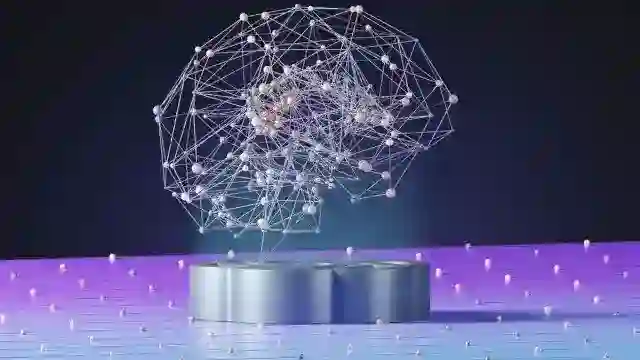
Quantum Geometry Links Spacetime Curvature to Particle Physics
A new geometric framework unifies quantum uncertainty with relativity, revealing how the universe's expansion and the smallest possible length scales emerge from a single invariant structure.

New Math Method Bridges Quantum Theory Gaps
A holomorphic approach reveals hidden connections between perturbative and non-perturbative quantum mechanics, solving a long-standing problem in theoretical physics with exact results.

Quantum Error Correction Without a Threshold
A new method uses a reusable catalyst to restore quantum states from noise, working even when error rates are high—but requires knowing the target state and many copies.

Quantum Decoder Choice Shapes Error Correction Thresholds
A new study reveals that the selection of decoding algorithms significantly impacts the reliability of quantum error correction, with some methods failing to produce stable threshold estimates under realistic noise conditions.
Quantum Computers Could Redesign AI's Core Learning Bias
A new approach argues that quantum hardware may enable more direct control over the smoothness and simplicity of machine learning models by manipulating their Fourier spectra—potentially bypassing the massive scale required by today's neural networks.

Quantum Records Force the Born Rule
A new theorem shows that the standard quantum probability law is the only consistent way to assign weights to stable internal records, under explicit structural conditions that isolate a precise threshold in quantum foundations.

Quantum Sensors Gain New Control Under Extreme Pressure
Researchers have uncovered how diamond defects behave under megabar pressures, enabling better quantum sensing for materials science and geophysics.

Quantum Batteries Show Universal Critical Signatures
A new study reveals that quantum batteries exhibit universal non-analytic behaviors at phase transitions, with odd dimensions showing jumps and even dimensions showing divergences in energy derivatives, offering insights for designing stable and controllable quantum energy storage.